Tuesday, June 17, 2014

Entry # 217 - Interview with Dr. Eric S. Mondschein, Author of Life at 12 College Road

Dr. Eric S. Mondschein is an author and education consultant. He has taught law and education, worked for the US government, published and edited numerous articles and books, directed an award-winning program for the New York State Bar Association, and served as advisor to an international NGO in Haifa, Israel, on external affairs, government relations, security, and analysis of human rights. His book, Life at 12 College Road is published by Something or Other Publishing and is available on Amazon.com and Barnes&Noble.com. He currently resides in the Adirondack Mountains of upstate New York with his wife, Ginny.  They have two grown children Adam and Emily, a son in law, Kamal, daughter in law, Yaani, and grandchildren, Annie, Nate and Eli.
Jan:   Tell me about your new book, Life at 12 College Road. Why will readers enjoy reading it?
Eric:   Life at 12 College Road is a collection of thirty-three “real life” short stories that, when taken as a whole, paint a mosaic of a time and place both familiar and distant. Each story can be read and enjoyed on its own, and each provides a different glimpse into the world of growing up in 1950s and 60s America. We all have memories—those that make us smile or laugh, others that bring anger or tears, and some that we’d just as soon forget. But those memories help to make us who we are today—and in some ways, who we will become tomorrow. While reflecting upon my past to write the book, I found that it was not the major earth-shattering events that were truly significant for me. Rather, it was the small things, many long forgotten until recently, that deeply touched me. The book is not really so much about me as it is about those feelings and emotions that we all at one time or another share; feelings of joy, happiness, sadness, anger, fear — and yes, loss — that each of us, in our own yet similar ways, do inevitably encounter. And if their retelling can help the reader connect with similar moments from their lives, then it was worth the time and effort in my writing Life at 12 College Road and their reading it 
Jan:   What inspired you to write this particular book?
Eric:   I am glad you asked this question. I had not intended to write this book at all.  I was on a mission to write an adventure/action thriller and was attending a writer’s retreat in Maine several years ago to do just that. But as fate would have it, I had decided to take a break, as I was just not getting anywhere and take a short nap. I was either dreaming, or it was during that period of time just before awakening that the idea came to me.

I recalled sitting at the dining room table where I had shared Sunday dinners with my family growing up. As I sat at the table, I realized the other three chairs had been tilted forward so that their ladder-backs rested against it. They were obviously no longer of use. And it was then that I remembered what had been bothering me: I was alone. You see, my mom, dad, and younger brother have all passed on without me. They are exploring new worlds and I have been left behind. Heck, even my dog is gone. It was that realization, those memories, which formed the impetus for me to write Life at 12 College Road.  So I put my novel on the shelf and proceeded to write this book. I may in time get back to the novel, as every once in while I think I hear the characters trying to talk to me.

Jan:   Why do you write?

Eric:   First, no one makes me write. In professional positions I’ve held over the years, I have been required to file reports, write memoranda, even treatises, but I was never required to publish law-related articles, write poetry, or Life at 12 College Road. I wrote those because I wanted to.

It certainly was not because I had nothing better to do. The time spent away from family and the activities that were sacrificed along the way attest to that. It was more often a feeling of being compelled to write. Not for others, although most writers do want people to read their work, but to feed a need or a desire coming from within.
Through this writing experience, I have come to recognize, dare I speak a universal truth, that even in the solitude of writing, we are not truly alone. Our memories of loved ones, friends, and those we admire are always with us, some closer to the surface of awareness than others, but they are there nonetheless. And if we are really willing to listen, they have much to offer.

Jan:   What do you need in order to do your best work?
Eric:   On one level I need the peace, quiet and solitude of just being alone. On another, I need to feel compelled not by others, but from within to write, whether it is a poem, a random thought or the monograph I am currently co-authoring with a friend, Ellery (Rick) Miller Jr. on sexual harassment and bullying, or the sequel to Life at 12 College Road. 
Jan:   As you aspire to improve as a writer where do you begin?
Eric:   I read a lot. I read newspapers. I read professional journals, magazines, short stories and novels in as many genres as I can. From fiction to non-fiction, historical, adventures, thrillers, science fiction, children’s stories to yes, even romance. Never thought I would say that, but I read Phyllis Edgerly Ring’s Snow Fence Road, and thoroughly enjoyed the story, the plot and the characters. The more I read the more I learn about writing. What works and what frankly does not. My parents were both prolific readers and would often share what they were reading during dinner and encouraged my brother and I to read. I also had a professor in College who told us “if you want to write you have to read, read, read.”
Jan:   What writers do you read?
Eric:   As I indicated I read a lot and in many genres, but I must admit I have truly enjoyed reading books by Dean Kootnz, John Sanford, Gary Pulsen, Dale Brown, Robert Ludlum, Clive Cussler, W.E. B. Griffen, and Wilbur Smith. And as a young boy I loved Ian Flemming’s James Bond books and Herald L. Goodwin’s Rick Brandt Science adventure stories.
Jan:   What is the best advice you ever received and what advice have you chosen to ignore?
Eric:   As it relates to writing, the best advice was to “read, read, read” and the advice I chose to ignore was that I probably should not try to write.
Jan:   When you review your work over the past couple of years what do you notice?
Eric:   The first thing I notice is that I think that I have now found my voice.  The second is that my writing is still evolving and improving, and will most likely continue to do so. At least I hope so. I also have learned so much working with other writers and attending writing workshops and just writing more and learning to accept criticism. That one I am still trying really hard to learn.
Jan:   Finally - What question do you wish I had asked?
Eric:   When you are not writing what do you like to do?  And my answer is that I truly enjoy being with the love of my life, my wife, Ginny. I also like being with my son and daughter and their dear families.
Jan:   How can readers buy a copy of your book and contact you? 
Life at 12 College Road is available on Amazon.com and Barnes&Noble.com. For those who live in upstate New York you can also pick up my book from Northshire Books Saratoga Saratoga Springs, NY and The Bookstore Plus Lake Placid, NY.
Life at 12 College Road
The Bookstore plus  http://www.thebookstoreplus.com
If readers are interested in some of my other works I invite them to visit my website at:      http://www.ericmondschein.com

Additional Notes on this Author:   Dr. Eric S. Mondschein is an author and education consultant.  He has a Doctorate in law and education from the University of Massachusetts at Amherst.  He has taught law and education at the undergraduate and graduate levels of education.  He has worked for the US government in various capacities, published and edited numerous articles and books in various areas of law and education and written and managed numerous grants from the private and public sectors.  He directed an award-winning law-related education program for the New York State Bar Association from 1980 through 1994.
 
From 1995 to 2006, he advised the governing board of an international non-governmental organization in Haifa, Israel, in the area of external affairs, including government relations, security and provided analysis of human rights situations in selected countries throughout the world in general, and in Iran and the Middle East in particular. He also served as the citizen representative of The Post Star editorial board, which won the 2009 Pulitzer Prize for editorial writing. His book, Life at 12 College Road is published by Something or Other Publishing and is available on Amazon.com and Barnes&Noble.com. 


He currently resides in the Adirondack Mountains of upstate New York with his wife, Ginny.  They have two grown children Adam and Emily, a son in law, Kamal, daughter in law, Yaani, and grandchildren, Annie, Nate, and Eli.
===========================================
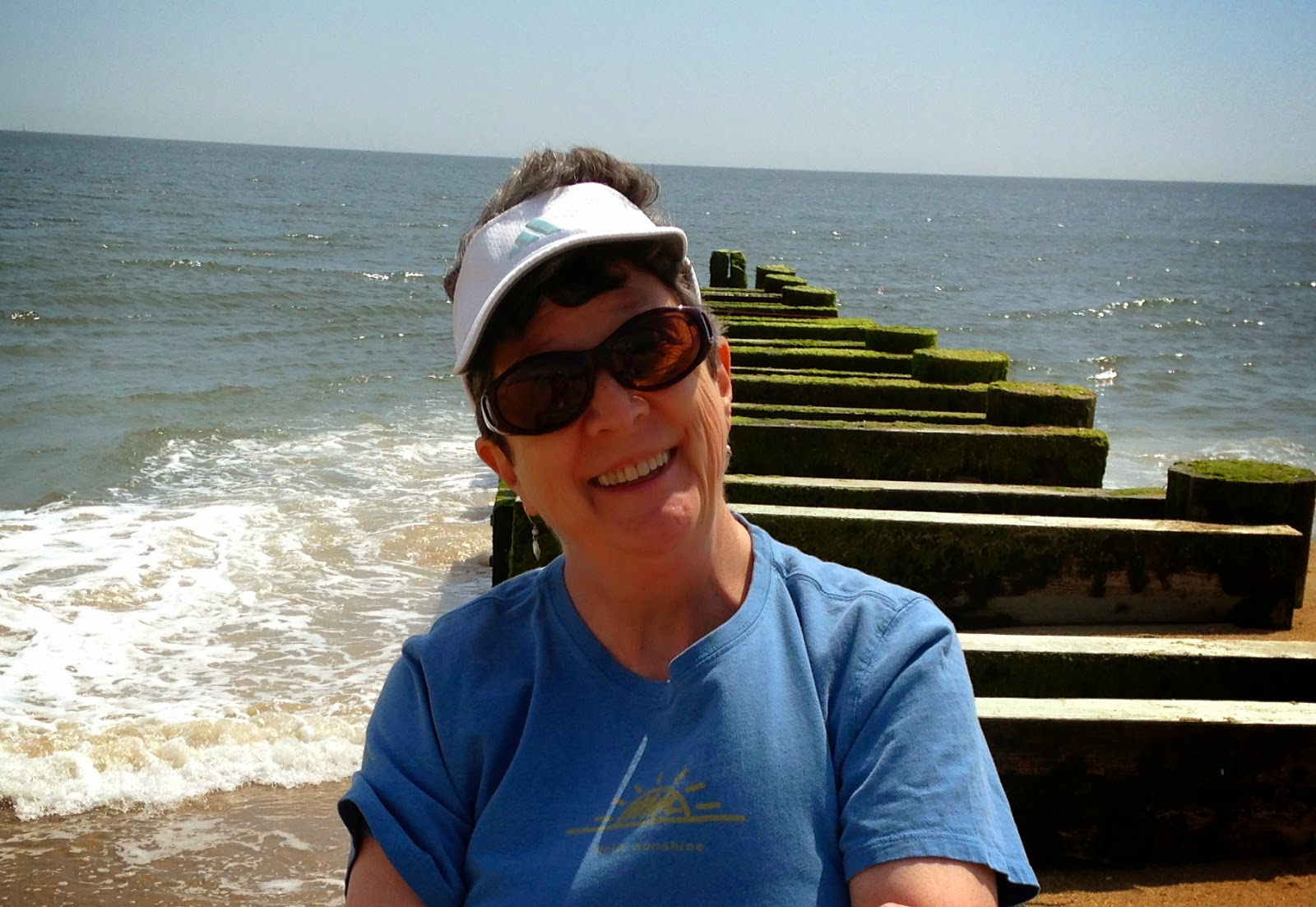
About Jan Bowman
Winner of the 2011 Roanoke Review Fiction Award, Jan's stories have been nominated for Pushcart Prizes, Best American Short Stories, and a Pen/O’Henry award.  Glimmer Train named a recent story as Honorable Mention in the November 2012 Short Story Awards for New Writers.

A recent story was a finalist for the 2013 Broad River Review RASH Award for Fiction, another story was a 2013 finalist in the Phoebe Fiction Contest; another was a 2012 finalist in the “So To Speak” Fiction Contest.  Jan’s fiction has appeared in numerous publications including, Roanoke Review, Big Muddy, The Broadkill Review, Third Wednesday, Minimus, Buffalo Spree (97), Folio, The Potomac Review, Musings, Potato Eyes and others.   She is working on two collections of short stories while shopping for a publisher for a completed story collection, Mermaids & Other Stories.  She has nonfiction publications in Trajectory and Pen-in-Hand. She writes a weekly blog of “Reflections” on the writing life and posts regular interviews with writers and publishers.   Learn more at: www.janbowmanwriter.com  (note: homepage under revision right now) so visit blog: http://janbowmanwriter.blogspot.com


Friday, June 6, 2014

Entry # 216 - "Online Journals Are The Future"

Small online journals are a growing trend nationwide. As costs associated with print journals continue to increase, online journals that feature a range of online work: poetry, fiction, nonfiction, humor, podcasts, music, art and videos are the future. Although there are hundreds out there looking for new writers and interesting materials, two such journals that have distinctive styles are examples of this trend: The Atticus Review (east) and A River and Sound Review (west).


Dan Cafaro, Editor & Publisher, and Zoe Henry, Managing Editor of Atticus Review produce an interesting cutting edge weekly journal.  http://www.atticusreview.org

And a river & sound review  Founder, Mgr. Editor, Humor Editor & Live Show Host, Jay Bates and Poetry Editor & President of Operations, Michael Schmeltzer produce a journal that features irregular live podcasts and remind one of A Prairie Home Companion on steroids.    
www.riverandsoundreview.org
http://www.riverandsoundreview.org/Staff/Whoswho.htm


My recent interview with Michael Schmeltzer and Jay Bates appears this week in the weekly interview section of Atticus Review.  
http://atticusreview.org/dogs-of-glory-and-reading-for-pleasure-an-interview-with-jay-bates-and-michael-schmeltzer/

While Michael and Jay's responses are edgy, funny, even over the top, they are entertaining. Check it out. Tell them I sent you. Feel free to comment and even send some of your best work to them. The worst you could get is a "no".

Jay Bates (Founder, Managing Editor, Humor Editor & Live Show Host) grew up an innocent in Puyallup, WA during the 1970s and '80s.  He was so innocent that when a girl asked him in the 8th grade if he was a he was a virgin, he said, "No, I'm a Taurus."  As a grown up, he teaches English and writes fiction, humor and sub-par doggerel poetry.  Beyond that, he has been known to use a Sharpie to correct the language on the "Ten items or less" signs found at the grocery store. He still makes his home in Puyallup with his wife, son, daughter, and dog, a yellow Labrador retriever named Ulysses. His work has appeared in The Southeast Review.

Michael Schmeltzer (Poetry Editor & President of Operations) is ready to rumble. Some journals publish his poems (Natural Bridge, Mid-American Review, etc.), many others do not (you'll come around Georgia Review). Most recently he has placed in contests held by Bellingham Review, Water~Stone Review, and Third Coast.  His honors include four Pushcart Prize nominations, the Gulf Stream Award for Poetry, Blue Earth Review’s Flash Fiction Prize, and the Artsmith Literary Award. If you want him to like you, mention any of the following: The Hunger Games, cosplay, writer/director Darren Aronofsky, Final Fantasy, Silent Hill, or simply call him pretty; he's vain like that.   
 ===================

Looking for Superman in Scotland - Jan Bowman -2013
About Jan Bowman

Winner of the 2011 Roanoke Review Fiction Award, Jan's stories have been nominated for Pushcart Prizes, Best American Short Stories, and a Pen/O’Henry award.  Glimmer Train named a recent story as Honorable Mention in the November 2012 Short Story Awards for New Writers.


A recent story was a finalist for the 2013 Broad River Review RASH Award for Fiction, another story was a 2013 finalist in the Phoebe Fiction Contest; another was a 2012 finalist in the “So To Speak” Fiction Contest.  Jan’s fiction has appeared in numerous publications including, Roanoke Review, Big Muddy, The Broadkill Review, Third Wednesday, Minimus, Buffalo Spree (97), Folio, The Potomac Review, Musings, Potato Eyes and others.   She is working on two collections of short stories while shopping for a publisher for a completed story collection, Mermaids & Other Stories.  She has nonfiction publications in Trajectory and Pen-in-Hand. She writes a weekly blog of “Reflections” on the writing life and posts regular interviews with writers and publishers.   Learn more at: www.janbowmanwriter.com or  visit blog:  http://janbowmanwriter.blogspot.com


Friday, May 30, 2014

Entry # 215 - Did You Hear the One About the Wood Carver, Miner, & Surgeon?


Rainbow 2 - Photo Credit - Jim Wilson - 2013
What does a wood carver, a surgeon and a miner have in common with a writer? Sounds like the punch line for a joke. And what does this rainbow photo from my friend, Jim Wilson have to do with the topic? Nothing! I liked it. But about the topic, here's this. I am reminded that Annie Dillard said,
 “When you write, you lay out a line of words. The line of the words is a miner’s pick, a wood carver’s gouge, a surgeon’s probe. You wield it, and it digs a path you follow. Soon you find yourself deep in new territory. Is it a dead end, or have you located the real subject?  You will know tomorrow, or this time next year.”

Some writers take a long time to shape the words on the page. Some take weeks, months, even years to match the vision to the page. Others write frantically, even feverishly until they’ve no more words left in them. I’ve read that Jack London wrote 16 hours a day, then went out drinking - only to stagger home and write more. He is said to have written about 50 books in 15 years. Then he killed himself at age forty. And of course trouble like this is not uncommon for writers many of whom are too hard on themselves. Their inner demons struggle with their expectations. One thinks of Virginia Woolf or Hemingway who were poster children for writers with issues. The list of troubled writers is long with lines of wasted talent for those who died too young from overwork and unrealistic expectations. 

So it seems important for a writer to get a good grip upon what’s possible and what makes for a successful productive day in the creative world.  And I believe it varies - from day-to-day, week-to-week, and writer-to-writer.

I’ve read that poet Donald Hall, poetry editor of the Paris Review said in a newspaper interview that it took him three-to-five years to get from his idea for a poem to the finished, published work.  Flaubert was said to spend as much as a week writing a perfect single paragraph.

George Sand wrote seven plays, a four-volume autobiography, and more than 50 books using . . . wait for it . . . A Quill! A QUILL!!  Hard to imagine isn’t it.
=============================== 
About Jan Bowman
Winner of the 2011 Roanoke Review Fiction Award, Jan's stories have been nominated for Pushcart Prizes, Best American Short Stories, and a Pen/O’Henry award.  Glimmer Train named a recent story as Honorable Mention in the November 2012 Short Story Awards for New Writers.

A recent story was a finalist for the 2013 Broad River Review RASH Award for Fiction, another story was a 2013 finalist in the Phoebe Fiction Contest; another was a 2012 finalist in the “So To Speak” Fiction Contest.  Jan’s fiction has appeared in numerous publications including, Roanoke Review, Big Muddy, The Broadkill Review, Third Wednesday, Minimus, Buffalo Spree (97), Folio, The Potomac Review, Musings, Potato Eyes and others.   She is working on two collections of short stories while shopping for a publisher for a completed story collection, Mermaids & Other Stories.  She has nonfiction publications in Trajectory and Pen-in-Hand. She writes a weekly blog of “Reflections” on the writing life and posts regular interviews with writers and publishers.   Learn more at: www.janbowmanwriter.com or  visit blog:  http://janbowmanwriter.blogspot.com
Facebook:  janbowman.77@facebook.com


Friday, May 23, 2014

Entry # 214 - " Wasting Time for Your Rose"


“It is the time that you’ve wasted for your rose that makes your rose so important.”  from  The Little Prince by Antoine de Saint Exupery

Malcolm Gladwell’s Outliers: The Story of Success, describes the amount of "pure practice and investment in time to move beyond mastery to actual expertise as somewhere around ten thousand hours." Perhaps there is such a thing as innately talented writers, but in reality, writing requires extensive practice. Trial and error directs most of us as we struggle to get words on the page.

Gladwell cites studies in which “the closer psychologists look at the careers of the gifted, the smaller role innate talent seems to play and the bigger the role preparation and practice seems to play.  . . . Excellence at performing a complex task requires a critical minimum level of practice and it surfaces repeatedly in studies of expertise.  It takes the brain about ten thousand hours to assimilate all that it needs to know to achieve true mastery.” The 10,000-hour rule translates into more than ten years of consistent practice where the daily process accumulates, increasing proficiency and expertise.

Even if you are smart - if you don’t work at getting in the practice time you’re not likely to play at Carnegie Hall or anywhere else - other than your living room.

“Practice isn’t the thing you do once and then you’re good.  It’s the thing you do that makes you good.”  Writers, like concert violinists, don’t get their expertise from thin air.  They work at it. Writers tending their rose are not wasting time; they are nurturing the rose to find its beautiful center.
=========================================
About Jan Bowman
Winner of the 2011 Roanoke Review Fiction Award, Jan's stories have been nominated for Pushcart Prizes, Best American Short Stories, and a Pen/O’Henry award.  Glimmer Train named a recent story as Honorable Mention in the November 2012 Short Story Awards for New Writers.  A recent story was a finalist for the 2013 Broad River Review RASH Award for Fiction, another story was a 2013 finalist in the Phoebe Fiction Contest; another was a 2012 finalist in the “So To Speak” Fiction Contest.  Jan’s fiction has appeared in numerous publications including, Roanoke Review, Big Muddy, The Broadkill Review, Third Wednesday, Minimus, Buffalo Spree (97), Folio, The Potomac Review, Musings, Potato Eyes and others.  

Jan is working on two collections of short stories while shopping for a publisher for a completed story collection, Mermaids & Other Stories.  She has nonfiction publications in Trajectory and Pen-in-Hand. She writes a weekly blog of “Reflections” on the writing life and posts regular interviews with writers and publishers.   Learn more at: www.janbowmanwriter.com or  visit blog:  http://janbowmanwriter.blogspot.com
Facebook:  janbowman.77@facebook.com


Friday, May 16, 2014

Entry # 213 - Short Stories with Strong Plots

Rehoboth Beach, DE - SUNRISE - May 11, 2014
Recently I sent an email to fellow writer and teacher, Paul Hanstedt and I asked him what he considered the three best stories he'd read, in terms of "strong plots" to be admired and studied. He responded by posting the question on Facebook and we've already received more than 50 suggestions.  I agreed to put together a list and post it for anyone who would like some short story readings to get their summer rolling. Actually there are hundreds of stories that should be on this list. As soon as I began to put it together I thought of so many contemporary writers whose work deserves to be on this list.  For example:  Lee K. Abbott, Rick Bass, Gina Berriault, Amy Bloom, K. L. Cook, Pinckney Benedict, Amy Hempel, Jesse Lee Kercheval, Yasunari Kawabata, Barry Lopez,  Elizabeth Spencer, Peter Taylor, Wells Tower, William Trevor, Tim Winton, Joyce Carol Oates, and many many others. So consider this list for what it is - a rapid response from generous readers, writers, and teachers who gave an instant response. I was reminded of many I'd forgotten and some I've never read so I have put them on my summer reading list - to be admired and studied. 

So Here Is A List of Readers & Writers Suggestions of Short Stories with Strong Plots - Some of which break all the rules for conventional plot structure but do it in such a way that writers admire the result.  Hope this is mostly free of errors. Some were suggested multiple times.  Enjoy.  And feel free to drop an email to suggest additional stories for this list.  Email: janbowmanwriter@gmail.com

James Baldwin - Sonny's Blues

Barthelme - The School

Andrea Barrett - The Littoral Zone

Richard Bausch - All the Way to Flagstaff

Bradbury - A Sound of Thunder, All Summer in A Day, There Will Come Soft Rains

Kevin Brockmaier - The Ceiling

Robert Olen Butler -Jealous Husband Returns as a Parrot

Raymond Carver - Cathedral

Samantha Chang - The Unforgetting

John Cheever - Good Bye My Brother

Chekhov - Gooseberries

Julio Cortazar - Continuity of Parks


Andre Dubus - A Father's Story

Richard Ford - Rock Springs

Tim Gautreaux - Little Frogs in A Ditch

Joe Geha - Letters from Phoenix

Gordimer - Some are Born to Sweet Delight

Lauren Groff - Delicate Edible Bird


Hemingway - The Short Happy Life of Francis Mccomber, Hills Like White Elephants

Christie Hodgens - Elegies for the Brokenhearted

Shirley Jackson - The Lottery

James Joyce - The Dead


Jhumpa Lahiri - A Temporary Matter

Ben Marcus - The Moors

Elizabeth McCracken - Some Have Entertained Angels, Unaware, The Goings-On of the World, Thunderstruck

Lorrie Moore - People Like That Are the Only Ones Here, Canonical Babbling at Reed Onk, stories from Birds of America & from Bark (Debarking)

Alice Munro - Vandals

Flannery O'Connor - The Turkey, A Good Man is Hard to Find, Revelation

Julie Orringer - The Isabel Fish from How to Breathe Under Water

Cynthia Orzik - The Shawl

George Saunders - Sea Oak, The Falls, The Perfect Gerbil

Jim Shepard - Love and Hydrogen

Leslie Marmon Silko - The Man to Send Rain Clouds, Yellow Woman, Storyteller


June Spense - Missing Woman

Elizabeth Tallent - No One's A Mystery

Vonnegut - The Package, Harrison Bergeron

Will Weaver - A Gravestone Made of Wheat

Eudora Welty - Why I Live at the Post Office

Tobias Wolf - In the Garden of North American
Wolf - A Bullet to the Brain
Richard Yates - A Really Good Jazz Piano

============================ Please Note My Website is undergoing  a major Facelift and the Home page is not fully functional at this moment. Check back later when it will be beautiful again. 
Me - Taking A Break from Writing - May 12, 2014
About Jan Bowman
Winner of the 2011 Roanoke Review Fiction Award, Jan's stories have been nominated for Pushcart Prizes, Best American Short Stories, and a Pen/O’Henry award.  Glimmer Train named a recent story as Honorable Mention in the November 2012 Short Story Awards for New Writers.
A recent story was a finalist for the 2013 Broad River Review RASH Award for Fiction, another story was a 2013 finalist in the Phoebe Fiction Contest; another was a 2012 finalist in the “So To Speak” Fiction Contest.  Jan’s fiction has appeared in numerous publications including, Roanoke Review, Big Muddy, The Broadkill Review, Third Wednesday, Minimus, Buffalo Spree (97), Folio, The Potomac Review, Musings, Potato Eyes and others.   She is working on two collections of short stories while shopping for a publisher for a completed story collection, Mermaids & Other Stories.  She has nonfiction publications in Trajectory and Pen-in-Hand. She writes a weekly blog of “Reflections” on the writing life and posts regular interviews with writers and publishers.   Learn more at: www.janbowmanwriter.com or  visit blog:  http://janbowmanwriter.blogspot.com
Facebook:  janbowman.77@facebook.com


Sunday, May 11, 2014

Entry # 212 - "Lissa Brown's Family of Choice - sequel to Another F-Word

At Sea Again - Photo Credit Jan Bowman - 2014
Over the next few months, I will follow up with writers previously interviewed about their work. Today's Blog Post is a follow-up with Lissa Brown whose interview for her first book, Another F-Word was posted as Entry # 152 on this blog.  Since that interview, Lissa's book won an award from a North Carolina Writer's Group, High Country Writers Book of the Year and she has just completed a sequel to Another F-Word, titled, Family of Choice.  Details for ordering a future signed copy can be found at the end of this interview on links to Lissa's website.

Jan:    Tell us about your newest book. 
Lissa:  I have just completed the sequel to Another F-Word. My working title is Family of Choice. Right now, it’s up in the air whether I self-publish as I have done with three previous books, or go the traditional route. I have had an expression of interest from a publisher and am awaiting his response. Family of Choice follows Rory Calhoun Wilson into the next phase of his life. He is now a medical doctor practicing in Baltimore, living with his partner, Nimo. Rory faces two major challenges: how and whether to resolve his miserable relationship with his father, the person who punished Rory for being gay, and whether he should legally adopt Nimo’s biological children from a former marriage. The story is set at the time when Marylanders are considering whether or not to approve Question 6, legalizing same-sex marriage.
    
 
Jan:  What have you learned about the marketing aspect of publishing with your first three books?
   Lissa:  First, I must confess that I come at marketing from a different perspective than many writers. I was a professional marketer for much of my paid-working life. That said, marketing books is very different. I’ve discovered that certain genres are much easier to market than others. My first book, Real Country: From the Fast Track to Appalachia, is a humorous memoir of our first 18 months living in an alien culture after being city women for most of our lives. It’s still a hit with tourists to the area of the Blue Ridge Mountains in NC where I live. People considering retiring to a different place also relate. Local mountain folks find it interesting to see their environment from an outsider’s perspective. Those are the audiences to whom I have to pitch that book.

   When I wrote Family Secrets: Three Generations, a YA novel, I had to seek out women in their 60s and 70s who remember the experiences of growing up in the 1940s and 1950s. Further, the protagonist is Jewish, so I sought out publications and locations that targeted Jewish people. Since I was portraying the angst of experiencing adolescence, I looked for psychologists who could review that book on Amazon.com figuring they’d give the writing greater credibility.

   Another F-Word had an altogether different purpose. Of course, I wanted readers to find it entertaining, but more important; I wanted to get across the idea that bullying of LGBT kids is life-threatening. The secondary message in that book is that entire families can be destroyed by it. A third message is that it’s critical for LGBT kids to have mentors and others who have their backs. I devoted an entire year after its publication to traveling and speaking to youth groups, church congregations, school counselors and others who might benefit from heightened awareness of how vulnerable LGBT kids are to bullying. I sought and obtained reviews in LGBT publications and attended conferences where I thought the book would have special appeal.

   Family of Choice will appeal to LGBT parents, so I will tailor much of my marketing to that audience. It carries forward the consequences of bullying, so I’ll return to the market I cultivated for Another F-Word.
    In summary, each book will have a particular group of marketing targets. I prefer the rifle approach rather than the shotgun. Pardon the gun reference, but those are marketing terms. I do not waste time doing signings in places where my target audiences don’t congregate. Since I’d prefer to be writing instead of hawking books, I try to make my time away from writing count.

Jan:  As you go out and speak to educators and readers about your book, Another F-Word, what are the most common questions?
     Lissa:  Parents often ask what they should do if the bully is a teacher or principal. It’s an important question, and as a former teacher I know it has a solid basis in fact. That’s sad, but it’s true.
      Kids frequently pose questions that imply a lack of support from adults who choose to ignore bullying. They include school officials, parents, clergy and others who are responsible for keeping children safe. Another commonly asked question from kids deals with how much risk they should take to stand up for a victim of bullying. They prize their social status highly and know they jeopardize it when they go to bat for another child.
      Since many of the groups I’ve spoken to are in the South, several questions relate to bigoted church leaders. I don’t hesitate to advise those who disagree with the religiously-inspired bigotry to confront the offender and if necessary to leave the church and find one that models more humane values.
Clouds & Sea Shadows - Jan Bowman - 2014
      Jan:  What has heartened you in your travels about the changing landscape of being gay and out in the South?
Lissa:  The fact that I’m struggling to answer this speaks volumes. First, I am able to be out in the South because I no longer need to hold a paying job. If I did have to work, it would be a different story. Naturally, the urban areas contain more foreward-thinking people on the issue of civil rights for LGBT people. But even in a rural Appalachian area like the one where I live, there are brave people who are willing to put their tolerant views out publically.

Maryland, while geographically considered part of the South, is a far different place from other southern states. The fact that it remains the only state whose voters have approved same-sex marriage speaks to its liberal nature, but even Maryland has pockets of voters who vehemently oppose equal rights for LGBT people. Note the Eastern Shore, Southern Maryland, Western Maryland and a considerable part of the population of Prince George’s and Anne Arundel counties and Baltimore.

At this point, I see equality being achieved through federal actions, and the South will have to be dragged kicking and screaming into compliance.

Jan:  What’s next? Do you have any new projects in the works?
         Lissa: I’m giving serious thought to writing a lesbian romance. I have an idea for a story and might tackle it. I’ll have to do a lot of reading before I can write. I confess I have not read many lesbian romances. If I do try it, I doubt I’ll be bringing the manuscript to my writer’s group for critiquing. It might be a bit much for them. Anyone out there know of a critique group for that genre?
     Until I decide, I’ll write occasional essays for anthologies and try to create a blog. For now, I have all I can do to keep my website, www.lissabrownwrites.com updated. My books are all available at Amazon.com under my name except the first one, Real Country. I wrote that under a pen name, Leslie Brunetsky. Since the readers of your blog tend toward the more literate, I’d especially welcome comments from them if they read any of my books. They can reach me at lissabrownwrites@gmail.com . Also, I’m happy to talk privately with anyone considering relocating to the South. They should send an email, and we can swap phone numbers.
     Thanks so much for your work to help other writers, Jan.  I appreciate your help.

============================================
Jan -  Off Coast of Ireland
About Jan Bowman
Winner of the 2011 Roanoke Review Fiction Award, Jan's stories have been nominated for Pushcart Prizes, Best American Short Stories, and a Pen/O’Henry award.  Glimmer Train named a recent story as Honorable Mention in the November 2012 Short Story Awards for New Writers.

A recent story was a finalist for the 2013 Broad River Review RASH Award for Fiction, another story was a 2013 finalist in the Phoebe Fiction Contest; another was a 2012 finalist in the “So To Speak” Fiction Contest.  Jan’s fiction has appeared in numerous publications including, Roanoke Review, Big Muddy, The Broadkill Review, Third Wednesday, Minimus, Buffalo Spree (97), Folio, The Potomac Review, Musings, Potato Eyes and others.   She is working on two collections of short stories while shopping for a publisher for a completed story collection, Mermaids & Other Stories.  She has nonfiction publications in Trajectory and Pen-in-Hand. She writes a weekly blog of “Reflections” on the writing life and posts regular interviews with writers and publishers.   Learn more at: www.janbowmanwriter.com or  visit blog:  http://janbowmanwriter.blogspot.com